
CUSTOMER STORY · STEVIA
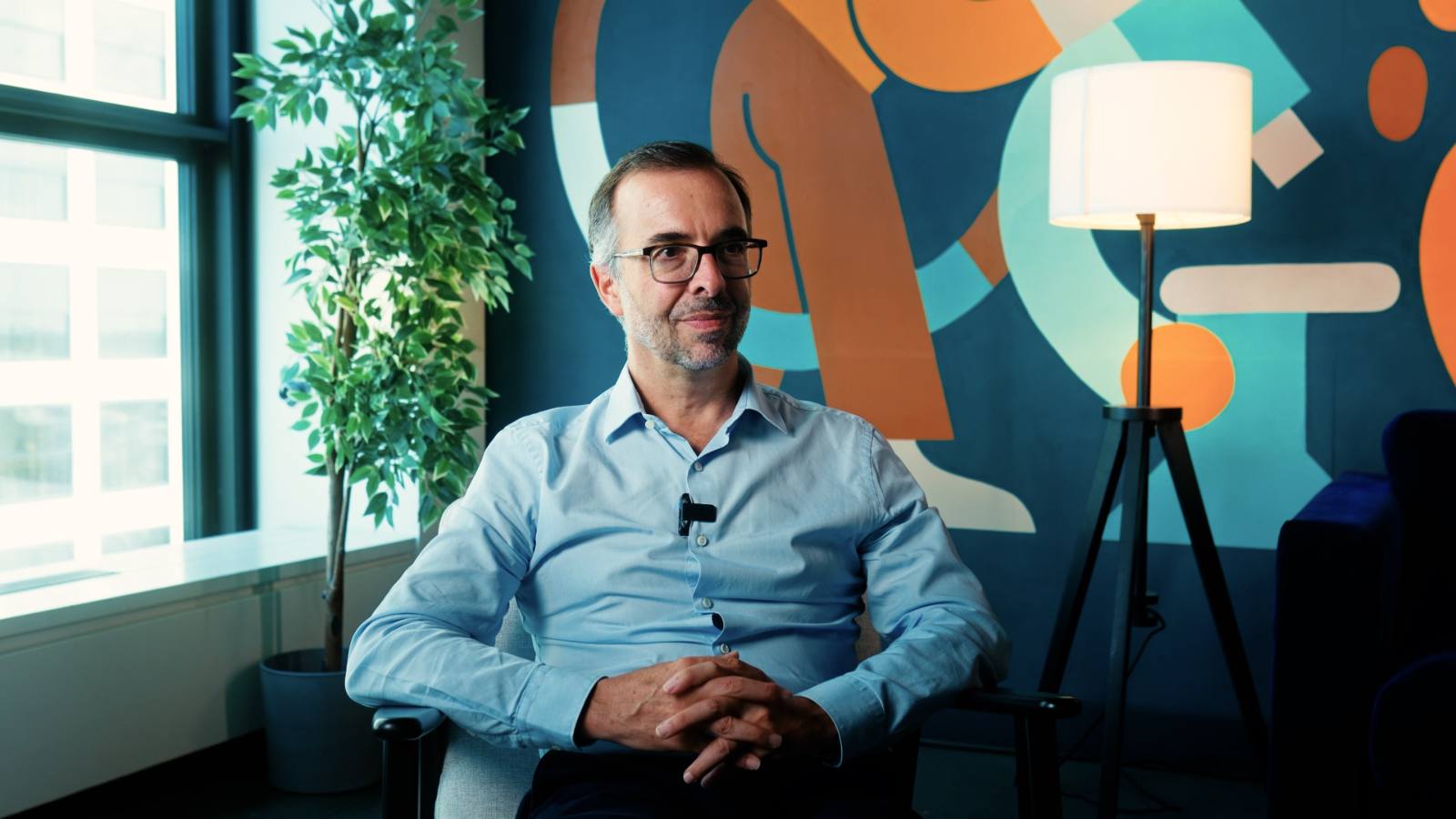
Christophe Perthuisot, still from his recorded conversation with GetFocusWatch the story
https://www.youtube-nocookie.com/embed/REBUTFlI4fA?rel=0&playsinline=1
A conversation with Christophe Perthuisot

“The experts who used it came back saying: this is incredible — we could never have done this before.”

this is incredible — we could never have done this before.

Christophe Perthuisot has spent 30 years running R&D at some of the world’s largest consumer groups — most recently as SVP of R&D at Moët Hennessy (LVMH), before that at Danone. A conversation about technology bets: why they go wrong, the one that nearly got missed, and what changed when his teams started measuring how fast technologies improve.

Christophe Perthuisot
Former SVP of R&D — Moët Hennessy (LVMH) · previously Danone
All quotes from a recorded conversation with GetFocus, 2026 — lightly condensed for length, wording unchanged.
01 · Thirty years of R&D bets
Speaker
Christophe Perthuisot
Role
Former SVP of R&D — Moët Hennessy (LVMH) · previously Danone
30 years in R&D
Consumer goods · food · spirits
Recorded conversation · 2026
30
Years leading R&D across large groups
~10
Years a wrong route ran before it was stopped — tens of millions spent
100 → 4–5
Technologies on the table, reduced to the bets worth examining
Months
Of expert work saved — in the experts’ own words
02 · The problem

The decisions that matter most get the least time

Three patterns from 30 years in the SVP chair — in his own words.

Today eats the calendar

“You spend a lot of time on short-term operational issues — and it takes a disproportionate amount of your time, because what you really want to spend your time on is building tomorrow and the day after.”

The landscape fragmented

“When I started working 30-plus years ago, there were very few options. Basically, it was between you and a couple of other big competitors. Nowadays, there are lots of options coming from startups, academia, and suppliers.”

Every funding call is a bet

“Good R&D directors will get more bets right than wrong, but you will always get some wrong. Unless you have the right tools, it is really an uneducated guess.”
Christophe Perthuisot

“When you have hundreds of technologies on the table for a single problem, it becomes unmanageable. It is not that people today are incapable — the complexity of the environment has increased enormously over the past decade.”

Christophe Perthuisot
Former SVP of R&D — Moët Hennessy (LVMH) · previously Danone
03 · Two bets, one missing signal

Stevia was the right bet. It nearly got dismissed.

The same missing capability cuts both ways: the promising route you almost reject, and the failing route you keep funding.

The bet that nearly got missed · Stevia, 2007

Every reasonable argument said no.

A small startup brought stevia to Danone in 2007. It had a strong licorice aftertaste. It did not fit the zero-sugar strategy management had set. Company policy ruled out sweeteners in children’s products. Every ground for dismissal was defensible.

The team learned the hard way — lab iterations, consumer tests, a first product at only a 30% sugar reduction, then further cuts as the technology improved generation by generation. “It turned out to be a great product, and it basically transformed the market.”

Outcome — market-defining product.Most reduced-sugar beverages today contain stevia.
The route that ran too long · Health claims

Ten years and tens of millions before the stop.

At the same period, a very large program pursued regulatory health claims through clinical studies. Clinical trials are designed to show strong benefits in sick patients — not to prove that food keeps healthy people healthy.

The signals were there. Acting on them was the hard part: “If you act on it, you may have to cut other projects. You cannot fund everything.”

Outcome — ~10 years of sunk coston a route the evidence had already turned against.

“It was the right bet in the end — but it could just as easily have been the wrong bet. We had no easy way to know how quickly these technologies would progress.”

— on stevia, and the signal that was missing
04 · What changed

From 100 options to the four or five that deserve action

What improvement-rate intelligence changed in how his organization made technology bets — and where the human judgment stays.

See everything

No more surprises from left field.

The most dangerous options are the ones nobody brought to the table.

“First, it helps make sure you see everything, so you are not surprised by something emerging from left field that you did not see coming.”
Back the likely winner

A dynamic view of which route wins the race.

Improvement rates turn a fixed-state snapshot into a moving picture.

“If I were betting on horses, I would rather bet on the one I knew was going to win… It allows you to boil things down from perhaps 100 solutions to the three, four, or five you really need to examine.”
Welcome the disagreement

The system challenges the house view.

When external signals conflicted with internal experts, that tension was the value.

“That is great. What you want is conflicting perspectives… You want the system to challenge existing thinking and the prevailing paradigms within the company.”
Judgment stays human

Better data. Same decision-maker.

Culture, industrial footprint and feasibility remain the leader’s call.

“The actual decision to invest remains with the head of R&D… The issue is not whether the system is perfectly accurate; it is whether it is accurate and reliable enough to help you ask the right questions.”
“When we tested the system in an organization, the experts who used it consistently came back saying: ‘This is incredible. We could never have done this before.’ They said it saved them months of work.”
Christophe Perthuisot
on adoption: start with the willing, and the results snowball
05 · The question for your process

“Is this process putting the right questions on the table?”

His closing advice to fellow R&D leaders was not about any tool. It was about what a technology-intelligence process must prove: that the choices you deliberate between are the possible winners in the first place. The leader’s expertise then shows in choosing among them.

“Especially when dealing with long-term investment, you need to make sure that the choices you are considering are between the possible winners first… Initially, the system should at least put the possible winners on the table.”
Christophe Perthuisot
All quotes from a recorded conversation between Christophe Perthuisot and GetFocus, 2026 · lightly condensed for length, wording unchanged
Decision-grade technology intelligence

Your stevia is out there right now. The signal says which one it is.

Bring us one live technology decision. We'll send back a decision-grade brief in 48 hours: the radar, the improvement rates, the triggers. No theory.

Free · 48 hours · preliminary scoping — validated radars come with a subscription